.svg)


Strategies for Performance Management Software Implementation



Overview
Performance management software helps organizations align goals, track progress, and support continuous employee development. Implementation requires structure and consistent use across teams to align focus. At Klaar, our platforms provide integrated tools that offer goal-setting, reviews, calibrations, and more. Here are some strategies for performance software implementation:
1. Goals, Objectives, and Key Results
Clear objectives support performance management software and make sure it aligns with organizational priorities. Teams should define their goals and determine how performance data will be used. This helps the platform deliver measurable outcomes.
Organizations benefit when leadership communicates expectations early, and employees understand how goals connect to broader initiatives. Objective-setting frameworks like OKRs provide consistency. Since unclear metrics reduce the effectiveness of adoption, defining benchmarks before rollout is key to implementation.
At Klaar, our Goals and OKRs feature a goal-setting system that includes KPIs, KRAs, and balanced scorecards. This allows teams to track progress in real time and gain predictive insights to help improve performance. Using this information helps spot and resolve potential blockers across all departments.
2. Performance Reviews and Feedback
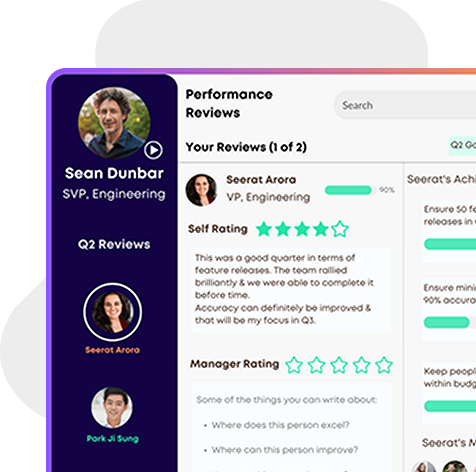
When feedback is continuous, it helps management review cycles and patterns. Structured one-on-one reviews allow managers to address performance and provide access to documented development conversations. Regular check-ins strengthen accountability and create a record of progress. Teams benefit from standardized review templates, and when reviews align with ongoing goals, feedback remains relevant.
Review and 1:1 tools support continuous feedback workflows. At Klaar, the platform automatically captures conversations, and it incorporates feedback into performance records. This includes data from past managers, matrix managers, and more. This helps collect data and make it worthwhile.
3. Evaluation and Calibration
Calibration helps organizations reduce rating discrepancies across teams. Managers can use calibration sessions to compare performance standards, and they align expectations. This process strengthens fairness in assessments and removes partiality.
Well-structured calibration encourages transparency, and it promotes shared evaluation. Teams can benefit from clear visibility into performance distribution. A module that has integrated documentation supports structured review discussions. It enables side-by-side performance comparisons and allows leadership to maintain evaluation standards. The software configures the solution and resolves deviations through AI-powered visualizations. This helps HR use the data they need to push back on biased decisions.
4. Consistent Use and Training
Successful implementation depends on adoption, and teams must understand how to use the platform effectively. Training supports consistent usage and helps managers apply tools correctly. Organizations should reinforce usage through regular check-ins and integrate the platform into daily operations. Adoption enables leaders to improve regular engagement.
At Klaar, we offer an intuitive platform with workflows. It centralizes performance data and enables organizations to standardize performance processes across teams. Companies can build their own design and architectures, helping match employees with internal mentors.
Use Performance Management Software
Implementing performance management software requires strategic planning, structured processes, and ongoing engagement. By aligning goals and reinforcing adoption, organizations can maximize the value of platforms like Klaar. With its comprehensive goal-setting tools, performance management software helps organizations build consistent, scalable systems. Reach out to our team today to learn more about our services and platform to support your company.
Wrapping Up
.svg)
Frequently asked questions


.svg)

.svg)