.svg)


Maximize Team Performance With Performance Management Software
.webp)


Overview
Performance management software allows management teams to track employee productivity across projects and use data to provide objective evaluations. The software also assists with in-office goal setting, making sure team benchmarks align with company objectives. Klaar provides comprehensive AI-powered data tracking, helping HR teams drive stronger employee engagement. Here are some ways management software helps maximize team performance:
Provides Continuous Feedback
Effective management software tracks key performance data across teams and projects to evaluate performance and efficiency. Managers identify which projects require more attention, helping them set benchmarks that promote consistent performance across teams. These real-time insights provide an early view of at-risk objectives, allowing management to respond quickly to performance gaps and keep projects aligned with company goals.
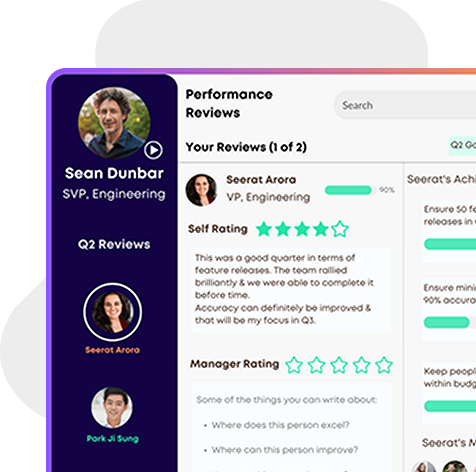
Regular progress updates also enable managers to provide project teams with targeted, relevant, and unbiased feedback. With performance management software, HR teams can create personalized feedback rating systems. They set parameters for performance reviews, such as quality and accuracy of work, and AI systems pull relevant data for objective evaluations. This provides employees with actionable, data-driven feedback, and managers with useful data.
Automates Management Tasks
Management teams are responsible for a wide range of duties, including supervising day-to-day operations, establishing objectives, assessing employee performance, and tracking and reporting key business metrics. These responsibilities are often time-consuming, so AI-assisted software helps improve efficiency and enables management teams to meet their productivity goals. Some tasks management software can do include:
- Calibrating data across platforms: Klaar integrates with a business's key apps, such as spreadsheets, CRMs, and communication software. This makes it easy for management to gather and assess data, since it's all housed in a single location.
- Writing performance reviews: AI systems summarize key data points to quickly create personalized performance reports. This reduces bias because feedback is grounded in measurable parameters.
- Preparing for 1:1 meetings: Some management software generates talking-point suggestions to guide these meetings. This helps balance recognition with suggestions for improved performance.
- Tracking goal progress: Organizations can set goals for individuals, teams, or the company as a whole. Real-time updates on completed benchmarks enable managers to continuously track targets without waiting for quarterly reports.
Supports Retention
High turnover within a company impacts project completion and delays strategic initiatives. HR teams that use measurable data to make assignment or promotion decisions are better able to align position requirements with employees' skill sets. Staff who demonstrate strong leadership qualities might be better suited to serve as project managers than those with an eye for detail and quality assurance. When skills align with talent decisions, employees are likely to feel effective and valued in their roles. This may help reduce turnover and support long-term organizational stability. Role alignment also helps reduce the need for regular oversight, allowing managers to focus on initiatives that meet client and employee needs.
Get Performance Management Software
Management software allows HR teams to track employee performance and project status in real time. This supports responsive decision-making as business goals change, benchmarks are met, or unexpected complications arise. This enables HR to support employee progress while also making talent decisions that are fair and equitable. With Klaar, managers are prepared to provide timely feedback and align team efforts with organizational objectives. Contact a performance management software provider today to learn more.
Wrapping Up
.svg)
Frequently asked questions


.svg)

.svg)